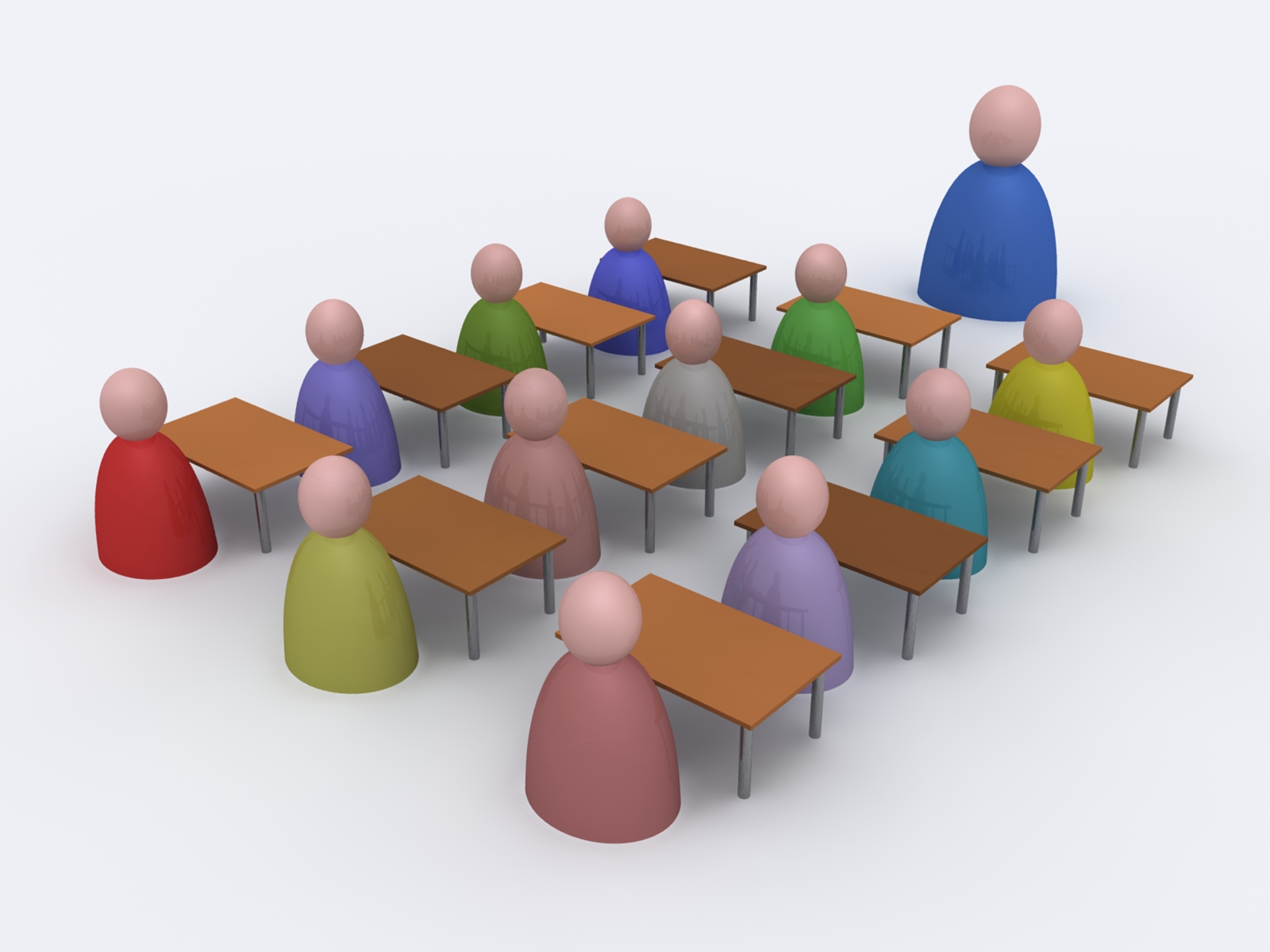
 Does class size really make a difference?
Frequent commenters Gen X and Army Amy have asked me to give you my thoughts on class size and its effect on learning. Early in this blog’s life, I wrote a post on class size, in which I assert that
I believe that if every class in the country were reduced to a maximum of fifteen students, many, if not most, of our educational and social ills would be resolved.
Four years on, I’m not as convinced. I’ve taught classes with as few as 3 students and as many as 43; I’ve had semester loads of 70 students and loads of 120. Of course small classes are nice: less grading, more chances for individuals to express themselves. However, the effect of the class size seems to vary wildly depending on the dynamic in the class, the level of the students, and the conditions under which we are working. I’ve had small classes that went pretty poorly, and big classes where everyone seemed to feel validated and supported. In the end, it was difficult to tell whether the students in the small classes really learned more.
There is research that purports that class size has a huge effect on learning. There is other research that purports that it doesn’t, or at least it has less of an effect than we think. As usual, statistics can tell any story we want them to tell.
Nevertheless, I persist in feeling I am a much better teacher to my students if I have fewer of them.
What is your experience, as either a teacher or a student? Does class size really make such a big difference? Obviously, teachers are happier if their classes are smaller. Are students happier too, and does this help them achieve?
Image by Sigur Decroos


 This is the first time I’ve actually put it down in hard, bold math! = P


 Classroom as Microcosm
Leave a reply to CrysHouse Cancel reply